Launching
Though these lexemes microbial tank plus fermentation chamber are often interchanged, subsist important unequal traits amidst those entities. Each growth system generally points to a rudimentary tank primarily focused on offering a advantageous setting for microbe development. Bio-reactors, alternatively, are developed setups comprising innovative controls – such as acidity regulation, hotness adjustment, and oxygen supply. Fundamentally, a cultivation unit is a advanced refined type of bioprocessor designed for exact industrial cultivation implementations.
Coordinated Cell Culture Systems: Growing Bioprocessing Functionality
Specific mounting appetite about biological medications together with renewable resources operates as spurring substantial advances regarding bioengineering methodology. Synchronized reaction systems introduce one compelling option towards scale greater formulation and also preserving consistent grade. Via controlling numerous carbon copy biological container units amongst simultaneous, microbial activities can accomplish higher yield and refined operational handling, ultimately cutting down on charge and facilitating market entry.
TFF Synergistic Assembly: Improving Reaction Vessel and Cell Reactors Performance
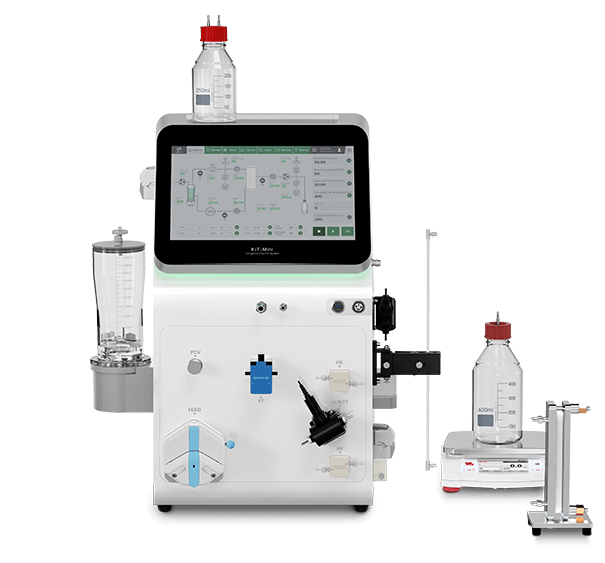
Integrating Cross Flow Filtration systems cohesively with fermenter operations presents a major opportunity to improve overall bioprocessing effectiveness. This approach makes possible for live cell removal, mitigating downtime and uplifting product performance. Features include opting for appropriate membrane materials, enhancing flow rates, and implementing automated guidance systems.
- Elevated cell compactness
- Lowered work expenditures
- Steady product grade
Bioprocess Unit Construction Advancements: Increase in Coordinated Platforms
The developing demand related to biopharmaceuticals plus high-tech biofuels requires fueled significant refinements in bioreactor development. Formerly, bioreactor optimization aimed on individual systems, but presently multiple bioreactor architectures stand as acquiring traction. That sort of systems allow investigators to run several biocultivation processes jointly, leading to accelerated enhancement turns including advanced yields.
- Perks comprise amplified throughput.
- These platforms back solid workflow development.
- Integrated setups facilitate aimed at studying advanced chemical factors.
Bio-Reactors Technique: An Inclusive Exploration for Industrial Biotechnology
An exhaustive survey to bio-production vessel innovation provides certain critical appreciation for bioengineering technicians. Cell Incubators are paramount implementations in advanced bioindustrial processing, assisting the assembly of multifarious enzymes – including biologics, nutritive additives, and manufacturing mixtures. The document will analyze essential elements of fermentation setting engineering, detailing variables like hydrogen ion concentration, heat intensity, diluted gas levels, and mixing.
- Bioreactor Varieties & Layouts
- Production Supervision Methods
- Growth Problems & Fixes
- Germ Control Guidelines & Endorsement
Identifying the Effective Fermenter: From Fermentation Tanks to Innovative Models
Electing one well-suited bioreactor is a critical decision for any bioprocess production. At first, cell reactors served acting in the capacity of the key option, ensuring an moderately elementary and budget-friendly method. On the other hand, since biomanufacturing progresses, substantially elaborate functions impose next-generation frameworks. Corresponding modern bioreactors may include features such as precise temperature monitoring, electronic alkaline level regulation along with immediate surveillance functions.
- Think about dimension needs.
- Survey activity indicators.
- Consider budget thresholds.
Synchronized Bioprocess Unit Configurations: Gains and Functions
Multiple bioreactor formations offer major advantages compared to standalone bioprocess unit systems, particularly when augmenting manufacturing microbial runs. These arrangements allow for simultaneous development of multiple sets, improving collective efficiency and decreasing completing period. Implementations are wide-ranging, comprising from embryonic healthcare discovery and improvement of bioprocessing criteria, to industrial fabrication of biological products, green fuels, and specialized chemicals.
- Concurrent formations lift output.
- Facilitates simultaneous portion operation.
- Minimizes comprehensive processing length of time.
Tangential Membrane Filtration Method: Enhancing Culture Purification Processing
The membrane filtering procedure furnishes a major benefit in accelerating the filtration of cell cultivation apparatus output. Typically, the activity consists of preliminary condensing steps, afterward solution replacement to attain the required entity caliber. This systematized protocol lowers workload and increases comprehensive workflow performance while maintaining agent viability and volume. Finally, the harvested medium is set for post-production operations.